You've built something useful. Now you need customers. The conventional advice is to "just start reaching out." But anyone who's actually done B2B sales knows the reality: cold outreach is brutal.
Cold emails have a 1-2% response rate. Cold LinkedIn messages perform even worse. And even when you do get a response, you're starting from zero trust. The prospect doesn't know you, doesn't trust you, and probably doesn't want to talk to you.
Why Cold Outreach Fails
The fundamental problem with cold outreach isn't your messaging or your targeting. It's the context. You're interrupting someone who didn't ask to hear from you.
Think about the last time you got a cold email. Even if the product was relevant, your default response was probably skepticism. Who is this person? Why should I trust them? Is this worth my time?
Someone you trust says "Hey, you should talk to [person] about [specific problem you have]." The entire dynamic shifts. You're curious instead of skeptical. Open instead of defensive.
The Warm Introduction Advantage
Why such a dramatic difference?
- Trust transfer: The introducer's credibility extends to you
- Relevance signal: Someone vetted that this meeting makes sense for both sides
- Social accountability: Neither party wants to waste the introducer's social capital
The Problem with Warm Intros
If warm introductions are so effective, why doesn't everyone use them? Because they're hard to get at scale.
Your existing network is finite. You can ask for introductions, but that requires knowing who to ask, what to ask for, and being willing to spend social capital. Most people run out of easy intros after a handful of asks.
And the people who could introduce you often don't know you need the introduction, or don't know who in their network would be a good fit.
A Better Approach
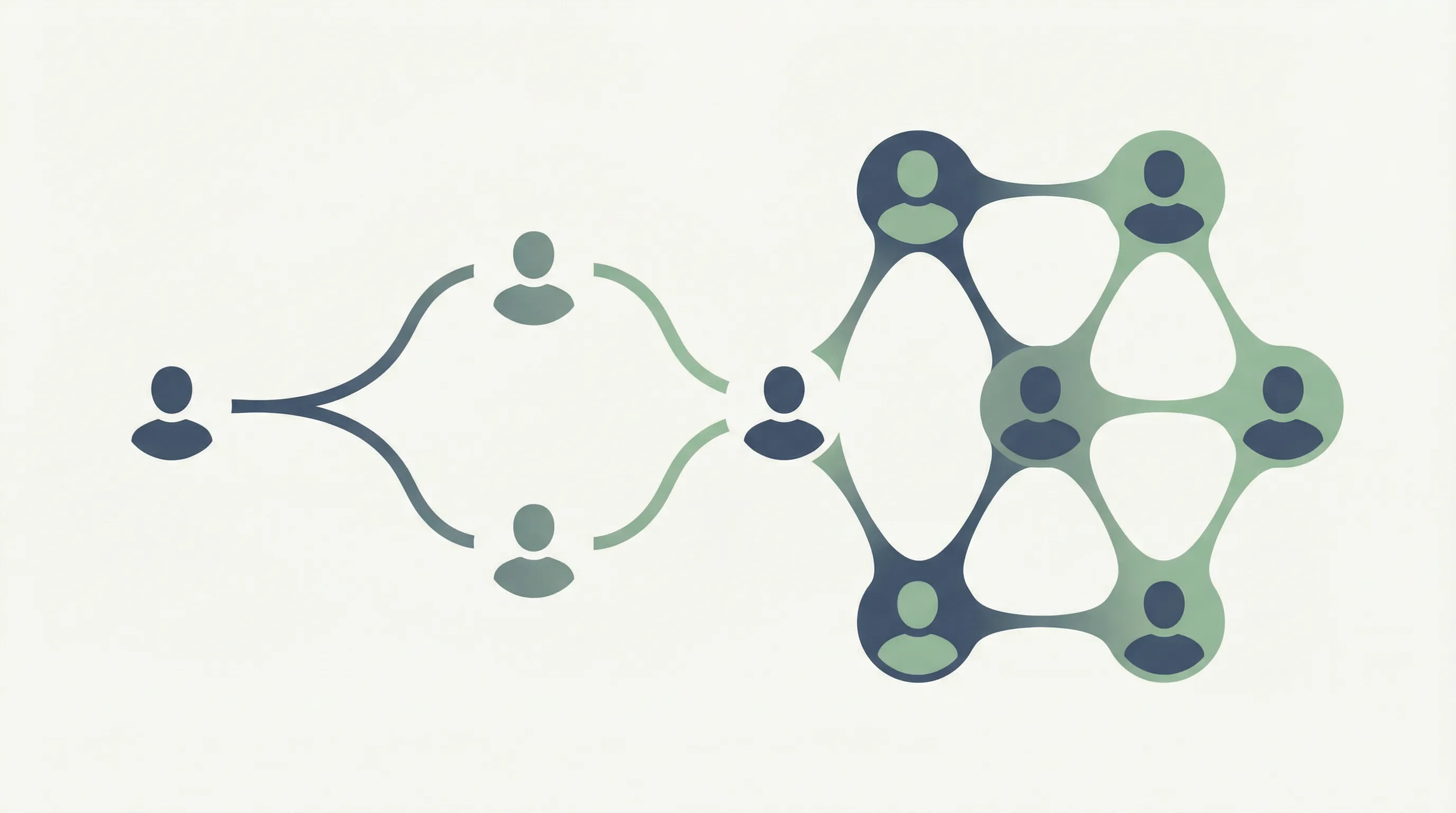
What if you could get warm introductions without depleting your existing network? What if someone else did the work of identifying who needs what you offer?
Instead of broadcasting cold messages to strangers, you tell us what you do and who you're looking for. We maintain a network of businesses with real, stated needs. When there's a match, when someone actually needs what you offer, we facilitate the introduction.
Getting Your First 10 Customers
Here's a practical framework for landing your first 10 B2B customers:
1. Get crystal clear on who you serve
"Small businesses" isn't specific enough. "Series A SaaS companies with 20-50 employees struggling with customer churn" is better. The more specific you are, the easier it is for people to connect you with the right prospects.
2. Exhaust your warm network first
Before going broad, mine your existing relationships. Former colleagues, friends in related industries, alumni networks. Ask specific questions: "Do you know anyone at a [specific type of company] who might need [specific outcome you deliver]?"
3. Join communities where your customers hang out
Not to pitch, but to be helpful and build relationships. Slack groups, industry forums, LinkedIn groups. Over time, you become a known quantity.
4. Use systems that generate warm intros
Services like NeedsMatch 🤝, curated intro communities, and connector-focused networking groups exist specifically to facilitate relevant business introductions. They're more scalable than relying solely on your personal network.
5. Make it easy to introduce you
Create a simple forwardable email or one-pager that explains what you do and who you help. When someone wants to connect you with a prospect, make it effortless.
The Bottom Line
Your first 10 customers probably won't come from cold outreach. They'll come from relationships. People who trust you introducing you to people who need you.
Focus your energy on building those connections, and the customers will follow.